Competitive Landscape
AVI Global Plast entered this engagement as a ₹300 crore export manufacturer operating across 33 countries and 6 continents — an established, successful business by any conventional measure. But unlike competitors who at least had partial analytics stacks to argue over, AVI had no dashboards, no owner of channel performance, and no baseline data of any kind. The competitive question wasn't "are we ahead or behind on metrics" — it was that the category of "having metrics" didn't exist yet internally, while the market around them increasingly expected data-backed marketing decisions.
Customer Insight
The real insight wasn't about customers directly — it was about the organization's blind spot regarding its own customer touchpoints. Without tracking, nobody could say which channels were actually driving interest, which messages were landing, or where prospects were dropping off. The business had been running on instinct and relationship equity for 25 years; that instinct had gotten it this far, but it couldn't be optimized, scaled, or defended in a boardroom conversation without numbers behind it.
Positioning
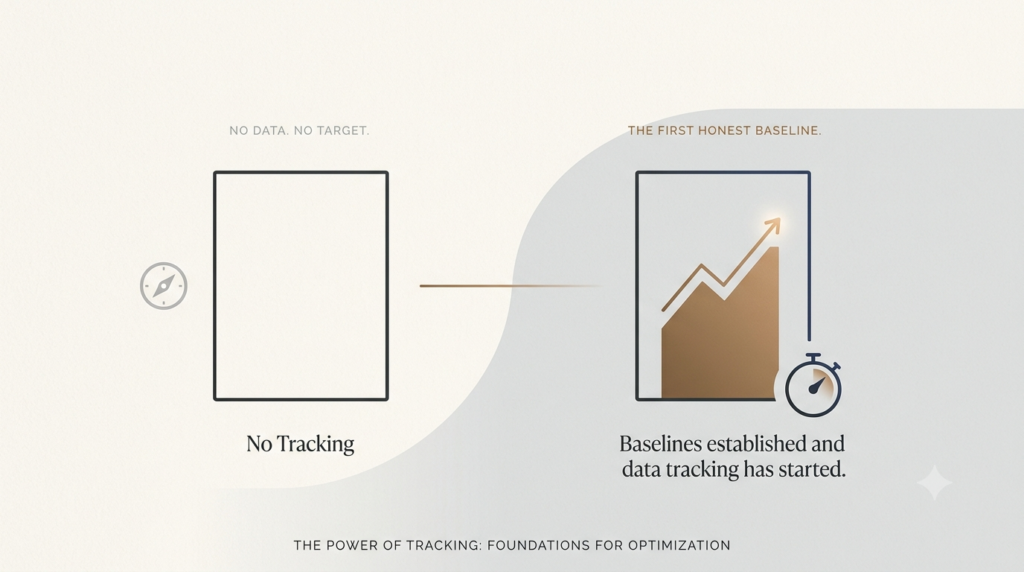
Before
A ₹300 crore business making marketing decisions on instinct, with no way to know whether any given change helped or hurt.
After
A measurement-first marketing function where every channel — website, email, social, events — has a baseline, and every change is judged against a number that existed before the change was made.
Messaging
The internal message was simple and unglamorous: an honest, unflattering baseline is worth more than no baseline at all. Rather than positioning early tracking data as a failure to be hidden, it was framed as the necessary starting line — the number every future improvement would be measured against.
Go-to-Market
Tracking was implemented across every touchpoint before any optimization work began: website analytics, email performance, social metrics, and event attribution. This wasn't a phased rollout chasing quick wins — it was deliberately sequenced so that the discipline of measurement existed before any tool or channel-specific campaign did. Only once baseline numbers existed did channel-by-channel improvement work start, run as a repeatable loop: identify a gap, make a change, measure the result, repeat.
Sales Enablement
Establishing shared, visible metrics gave Sales and Marketing a common language for the first time — conversations about channel performance and lead quality could be grounded in actual numbers instead of anecdote, a prerequisite this case study's own conclusion leans on: you can't prioritize what you're not measuring, and that applies as much to sales handoff quality as to channel spend.
Launch Assets
Dashboard
Consolidated view combining website analytics, email performance, social metrics, and event attribution into one baseline dashboard.
Framework
The repeatable improvement loop built once baseline tracking existed: identify a gap, implement a change, measure the result, repeat.
Business Impact
0
Channels instrumented
Website analytics, email performance, social metrics, and event attribution unified into one connected measurement system.
0 → 1
Baseline established
First honest, connected baseline captured across every channel — the number every future change would be measured against.
Repeatable
Optimization loop
Identify gap, implement change, measure result, repeat — replacing ad hoc tactics with a compounding system.
Lessons Learned
Most organizations don't actually struggle with bad metrics — they struggle with the complete absence of metrics, a gap quiet enough that a successful business can run for years without anyone flagging it, because nothing looks visibly broken. Tools amplify a measurement discipline that already exists; they don't create one. Establishing the habit of tracking before buying any tooling is what made the eventual investment in better systems actually stick.